

SEA TURTLE HATCH IN PANAMA
Lately, I’ve been able to check off a lot of items on my bucket list and for that I feel super-grateful. Most of my bucket list items are about traveling to exotic locations, but a few select nature things make my list as well like seeing a puffin in the wild, spotting a resplendant quetzal or, in this case, seeing baby sea turtles make their way to the ocean. Honestly, I didn’t know if this would ever be a reality, but thanks to the team at Fundación Tortuguías Panamá, this dream came true.
WHO ARE TORTUGUÍAS?
This conservation group has been operating out of Punta Chame, Panama, for 15 years now and they offer visitors a chance to see newborn sea turtles make their way to the Pacific. Every year, five of the seven species of sea turtles worldwide make their way to Panama’s shores to nest. In fact, these creatures come ashore in over 200 locations around the isthmus to deposit their precious eggs. The foundation is made up of young Panamanians and volunteers from around the world who strive to protect marine ecosystems releasing over 500,000 baby sea turtles since 2010 as well as conducting beach clean ups and workshops to educate the community about the importance of caring for our fragile environment. You can experience the magic of a turtle hatch by visiting their beachside nursery in Punta Chame.
WHAT WILL I SEE?
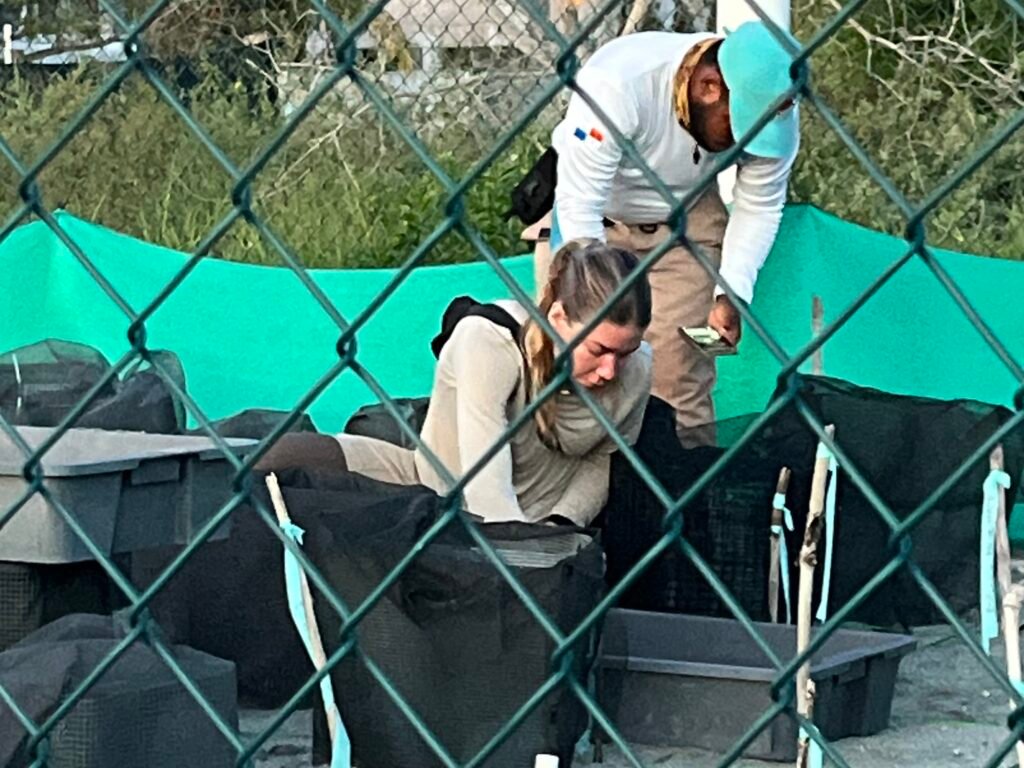
We arrived from Panama City just before daybreak at 5:45 a.m. They release the hatchlings at dawn for a myriad of reasons: protection from active predators, shelter from intense heat, and their natural instinct to go toward the dimly lit horizon. We took the dark beach trail to a fenced-in mound of numerous turtle nests where eggs had been safely transferred by the volunteers a couple of months prior for safekeeping until the babies were ready to emerge. When the volunteers arrived at the vivero–or nursery–they began loading up their bins with the newborns that had just hatched 4 hours before. They counted 160 baby Olive Ridley adorable, baby sea turtles. I was lucky enough to carry one of the bins down to the beach. I spent a lot of that time trying to burn the experience onto my brain, because how crazy was this?!?!
THEIR FIRST SWIM
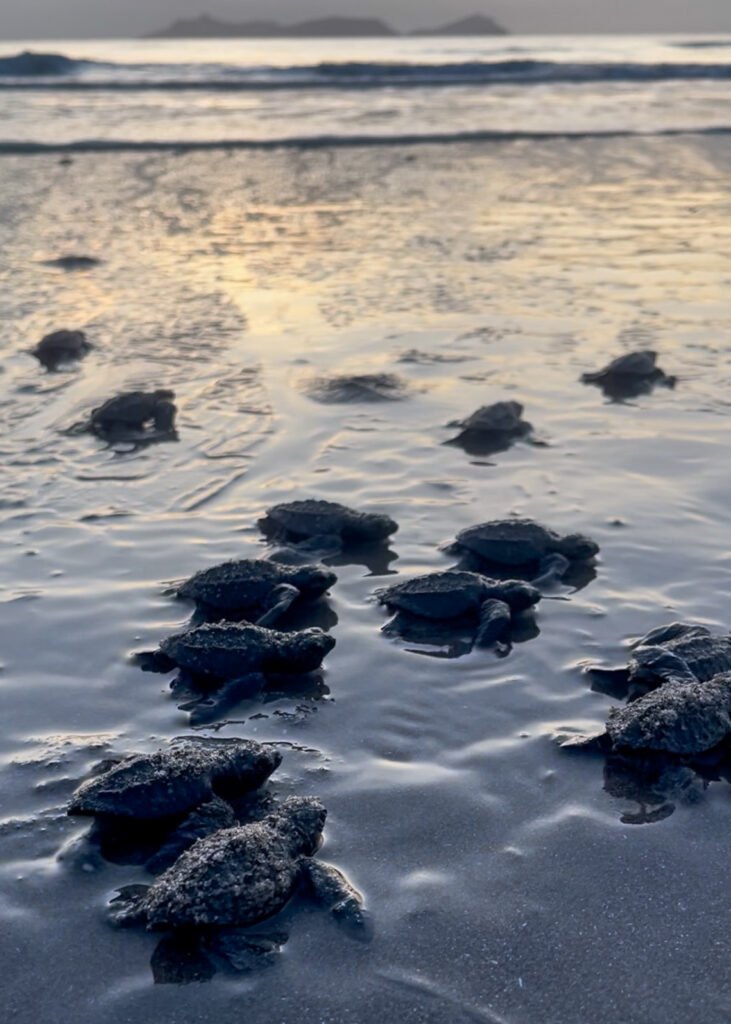
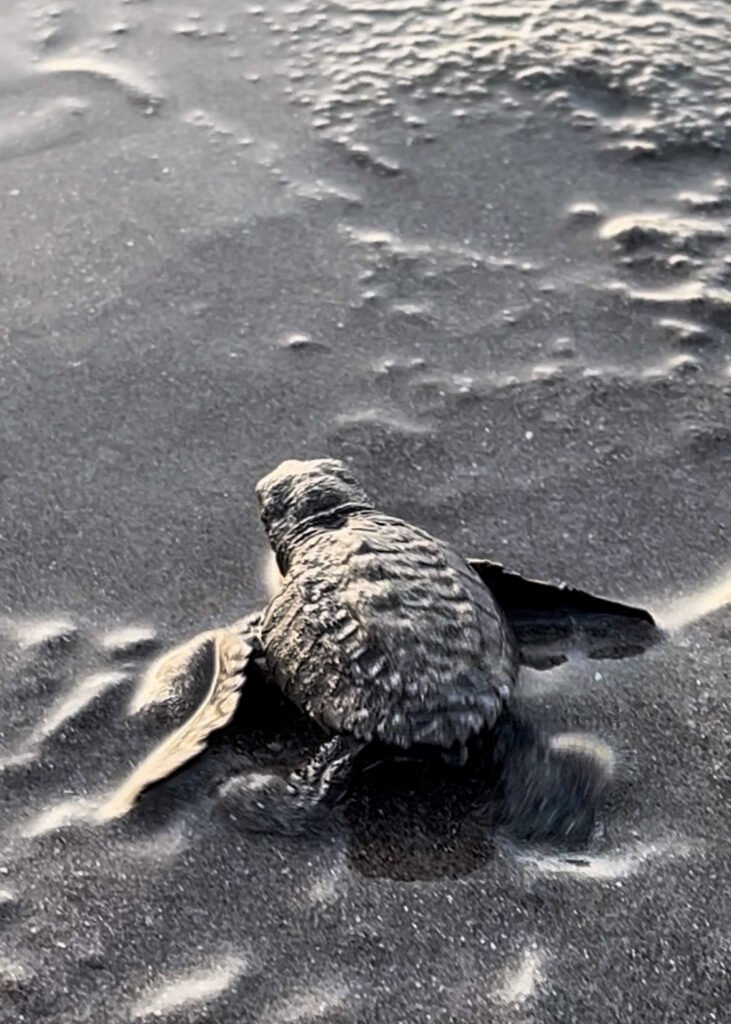
Our guide chose a unique spot to release the turtles that morning. He explained that each time they release the turtles, they try to pick a new location, so the birds are not waiting to fill up on baby turtles for breakfast. We put our bins down on the beach and they turned the babies onto the sand to make their way toward the Pacific guided by the peachy light breaking over Isla Otoque. There were a couple of special ones that headed in the wrong direction and some stragglers as well. Eventually, each and every one made it to the water. I was really glad we didn’t have to witness any bird attacks, though I know their chances of survival are really slim with only about 1 in 1,000 reaching adulthood.
WHEN TO VISIT
Baby sea turtles begin to hatch on the beaches of Panama from mid-July all the way through January. From Colón to Bocas, Chiriquí to Chame, there are around 40 conservation organizations operating out of Panama with the mission to preserve these threatened and endangered species for future generations. Expect the experience to begin at daybreak around 5:45 in the morning.
HOW TO REGISTER
Tortuguías releases their calendar of events on the first day of the month. Simply check their Instagram account, scan the QR code on the second slide and submit the information for your group. You can pay by bank transfer, Yappy or cash. You’ll receive an email with a link to upload proof of payment. For more information about Fundacion Tortuguías and their conservation efforts visit their website at http://www.tortuguias.org/.

MORE THAN JUST A TOURIST ATTRACTION
Participating in a baby turtle release in Punta Chame isn’t just a photo op: it’s a connection to nature and a meaningful educational experience with an emphasis on commitment to protecting endangered species for future generations. The conservation work happening in Punta Chame is evidence that dedicated communities, passionate scientists, and engaged visitors can make a difference.
What’s your most memorable nature encounter in Panama? Comment below!