About 45 minutes away from the gleaming skyline of Panama City, there’s an indigenous tribe who still live a remarkably traditional way of life, reflective of their roots from years gone by. The Emberá were historically a semi-nomadic people who moved between Panama and Colombia. Today, they live in more permanent villages where they let visitors in to see what life is like in a Panamanian Indigenous Comarca. The Emberá of Panama are truly a world away.
A DAY TRIP TO THE EMBERÁ VILLAGE & WATERFALL HIKE
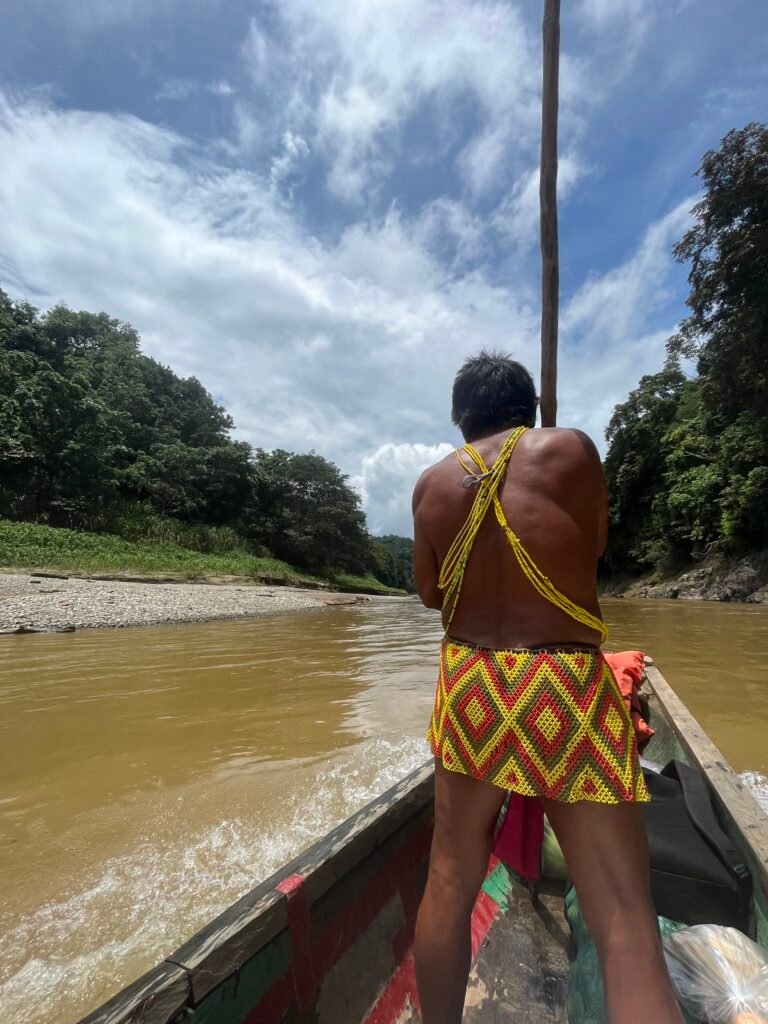
The view from the shoreline of Chagres National Park just outside Panama’s capital is other-worldly. Enormous wooden canoes called piraguas are all lined up on the banks waiting with their indigenous guides to carry tourists upstream for the first adventure of the day: a hike into the jungle for a dip in a rushing, tropical waterfall.
JUNGLE WATERFALL HIKE
My group of 8 friends and I piled in two by two and headed up the flat waters of the river toward the trailhead, taking in the sights and sounds of this totally new environment. We passed by the Emberá villages where we would lunch and learn later in the morning. For the moment, we focused on our hike. Along the way, we spotted a nutria slipping into the water, marveled at beautiful, irredescent, blue morpho butterflies and heard howler monkeys high in the trees as we walked the trail.
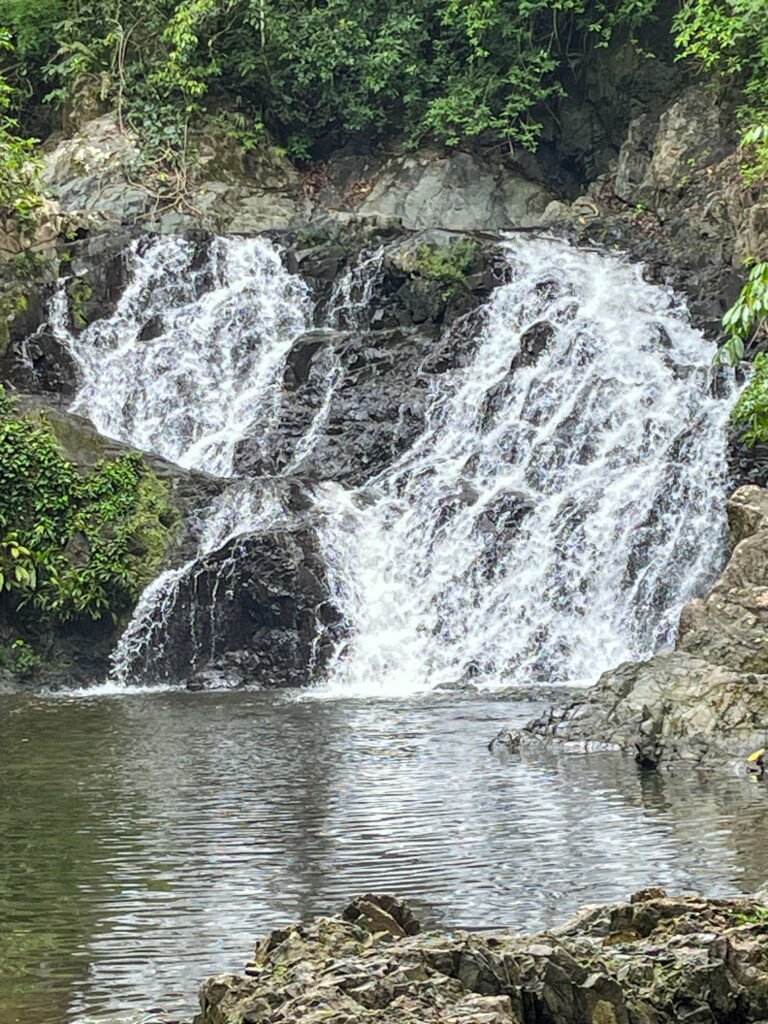
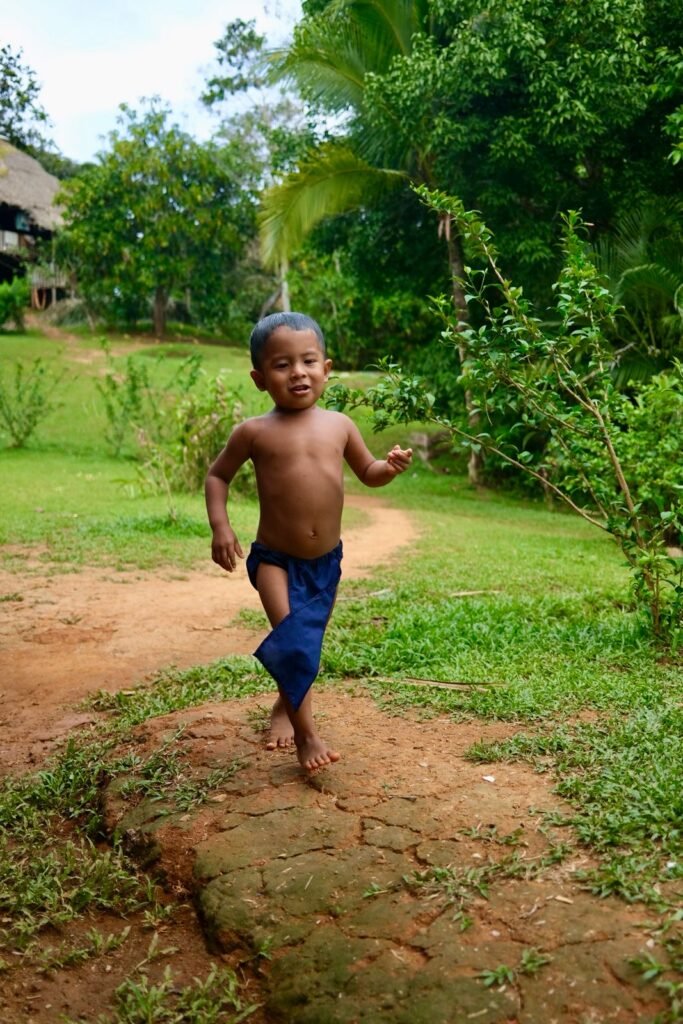
The path can be slippery in spots and there are some sections where you will definitely need to do some climbing over large rocks. For me, that’s part of the adventure–for others who aren’t frequent hikers, it might be a challenge. We arrived at the waterfall about 40 minutes after setting out, with some stops to rest. The location is very exotic with a huge swimming hole of fresh, crystal clear water. Young Emberá kids climbed and jumped from the falls, while the occasional tropical butterfly floated overhead and fish nibbled at our feet. We relaxed here for about an hour after a sticky hike, before we headed back to the piragua.
WHO ARE THE EMBERÁ?
The Emberá are one of Panama’s seven recognized indigenous groups. They can trace their roots to the Chocó region of what was once La Gran Colombia, arriving in Panama roughly 300 years ago and settling primarily in the Darién jungle. They maintain their own language and the spiritual leadership of their wise elders — the noko and the jaibana — and a deep connection with nature reflected in their art and worldview. The Emberá have around 30,000 members in Panama and another 50,000 across the border in Colombia.
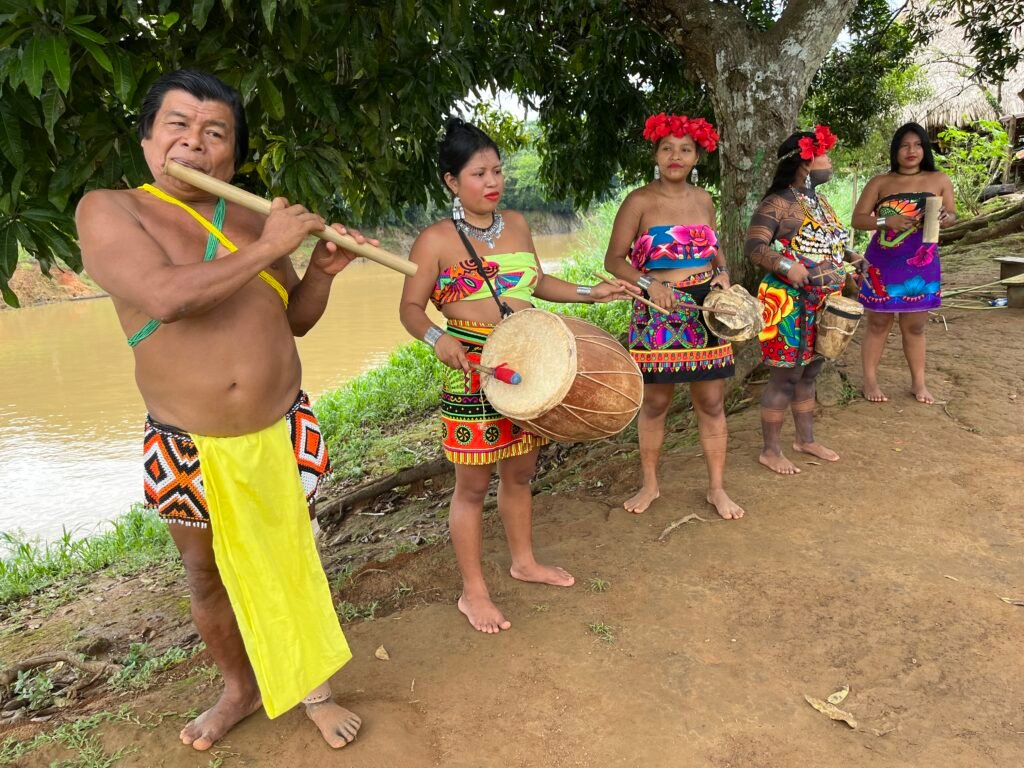
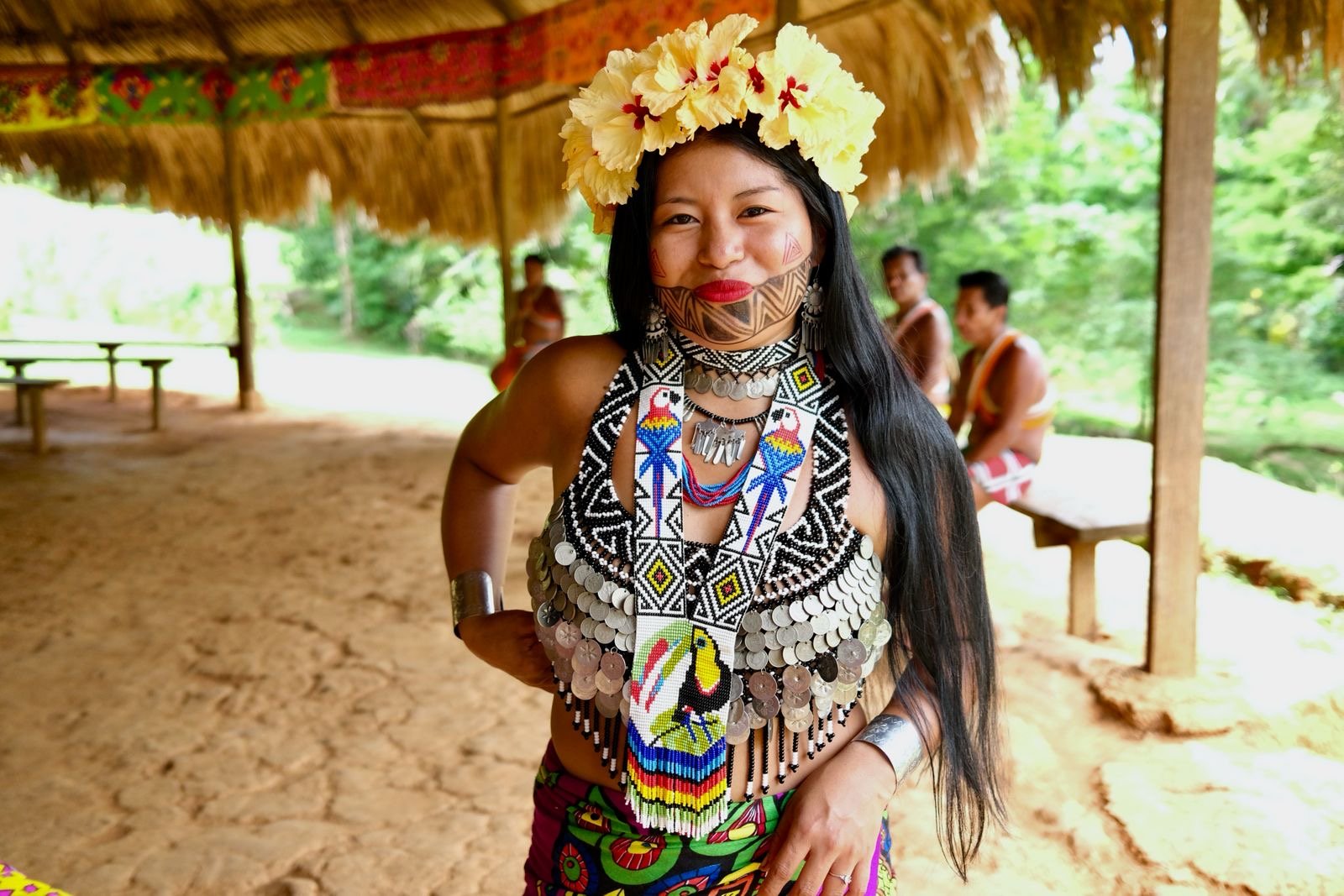
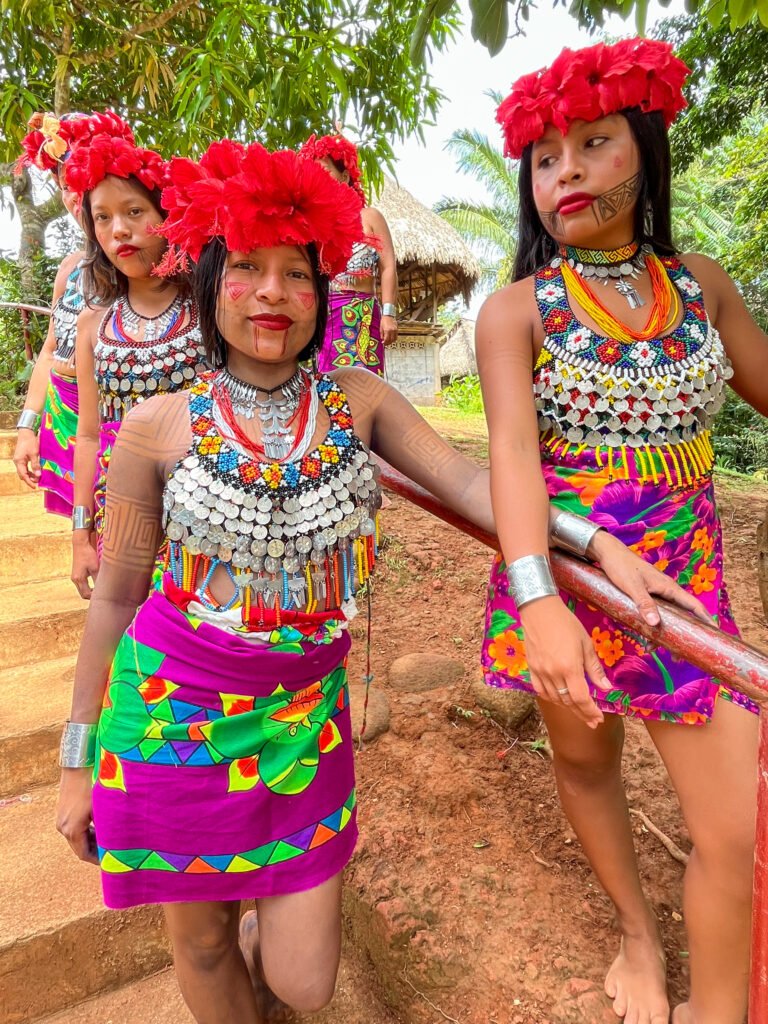
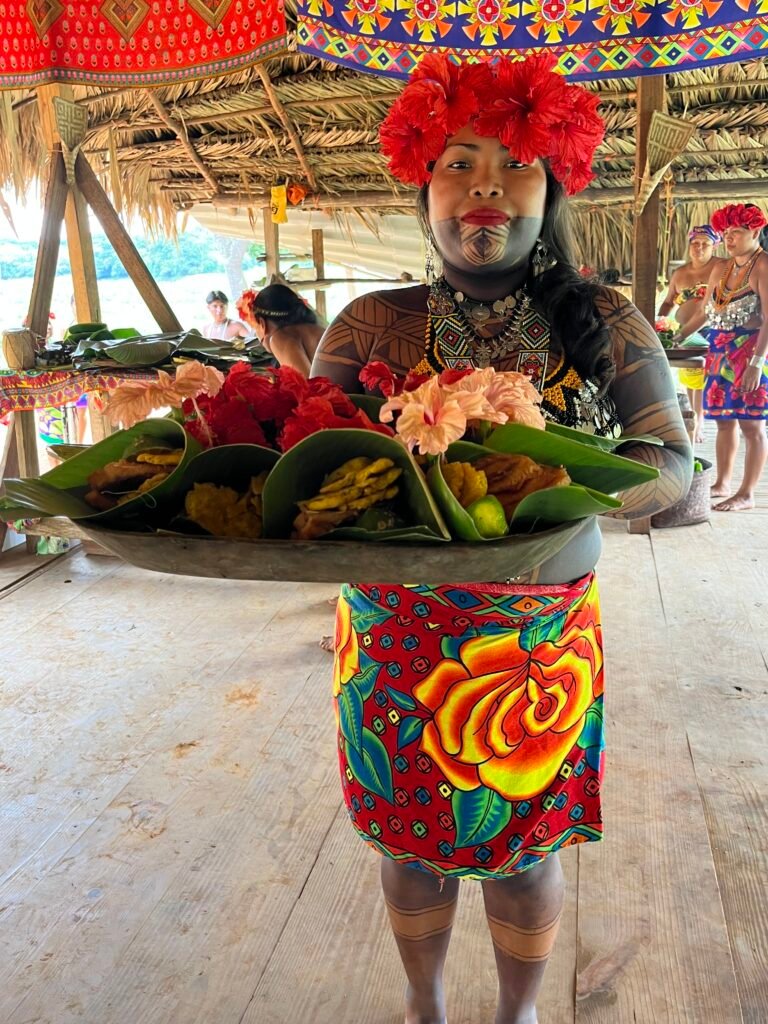
On arrival, the community warmly greets visitors in their native language, Chocó, while playing flutes, bongos, and a turtle shell. The women dress in brightly colored parumas–skirts–beaded tops and gorgeous hibiscus headpieces. Children play and splash in the shallows of the Chagres which is the main tributary of the Panamá Canal and Lake Gatún. We promptly took a seat under one of the thatched rooves propped high on stilts, where we would chow down on the most gorgeous lunch of tilapia, patacones, mango and pineapple.
THE LIVING CULTURE – ARTS, CRAFTS & BODYPAINT
I love indigenous artistry. This is the perfect place to pick up something amazing and also learn about the process. Weaving with nahuala and chunga palm fibers dyed with natural pigments is one of the most emblematic expressions of these communities. Women weave baskets tightly enough to hold water. The vibrant, intricate patterns carry deep symbolism — representing creatures of the rainforest, the flow of the river, or spiritual beliefs. The smallest baskets can take 15 days; the largest, several months. Meanwhile, men carve sculptures from cocobolo wood and tagua nuts, depicting rainforest animals with remarkable character and detail.
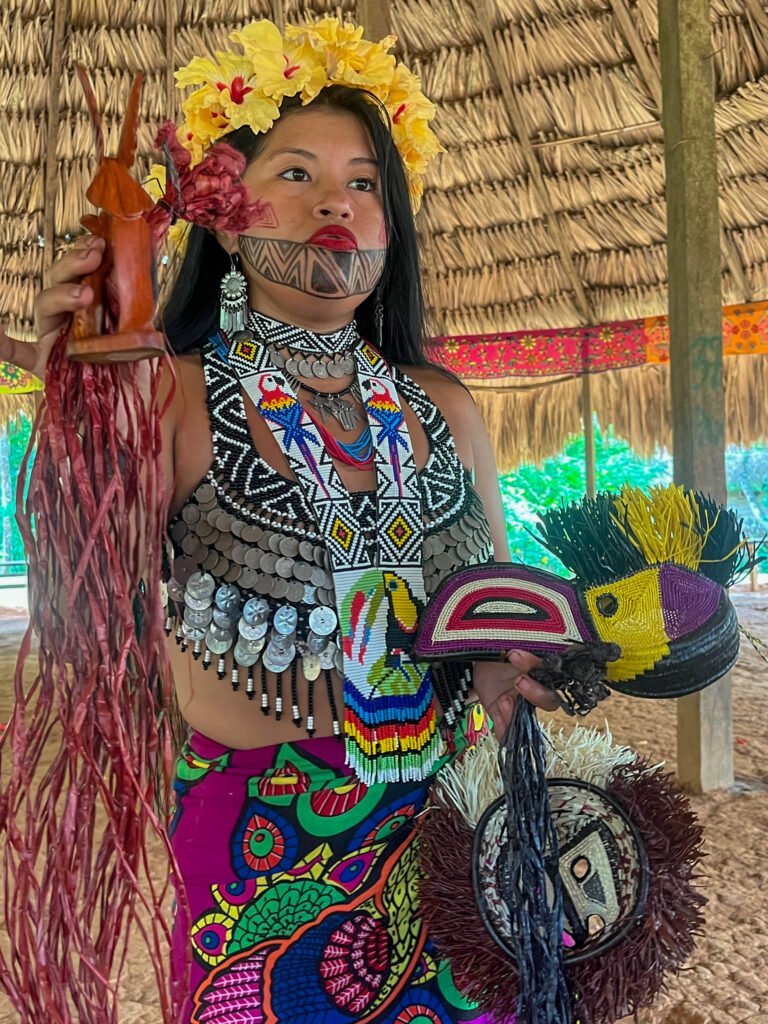
Every handicraft is a means of expression and transfer of knowledge. Buying directly supports the local economy and helps ensure indigenous cultural knowledge isn’t lost over time. If you think you might want to purchase something, it’s a great idea to bring cash. These are beautiful pieces well worth the asking price.
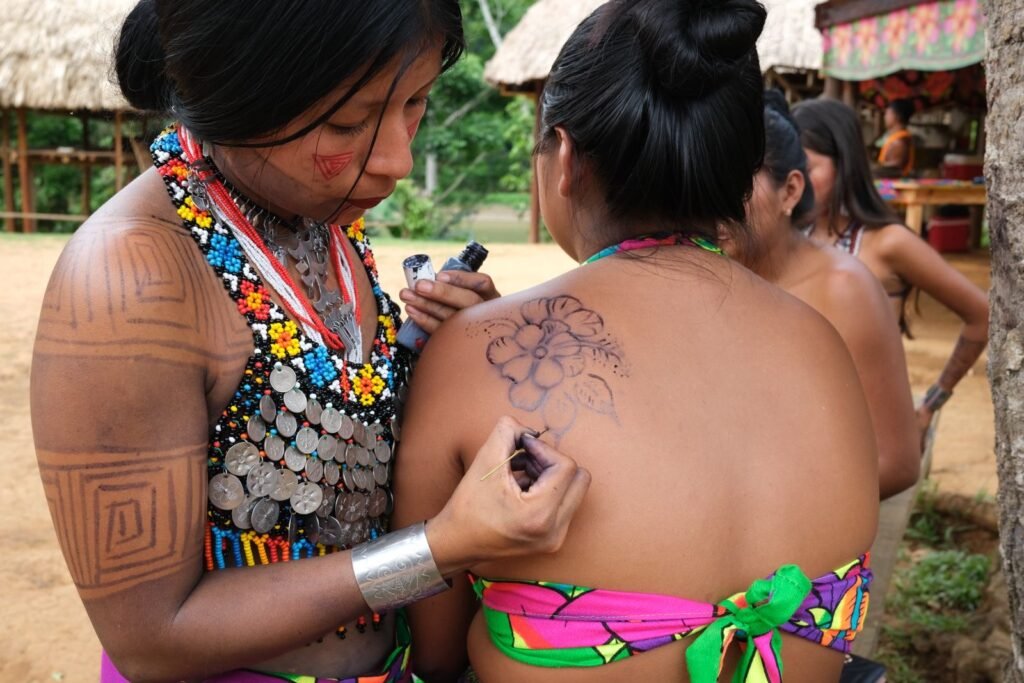
You can’t help but notice the body painting called jagua. The Emberá extract a dye from the seed of the fruit to create temporary tattoos full of meaning — it also acts as a natural sunblock. The painting (kiparapa) lasts about 11 days and begins fading around day eight. During tour free time, you can choose a jagua design with a simple one starting at as little as $5. More complex deisgns fetch a higher price.
MUSIC DANCE AND STORYTELLING
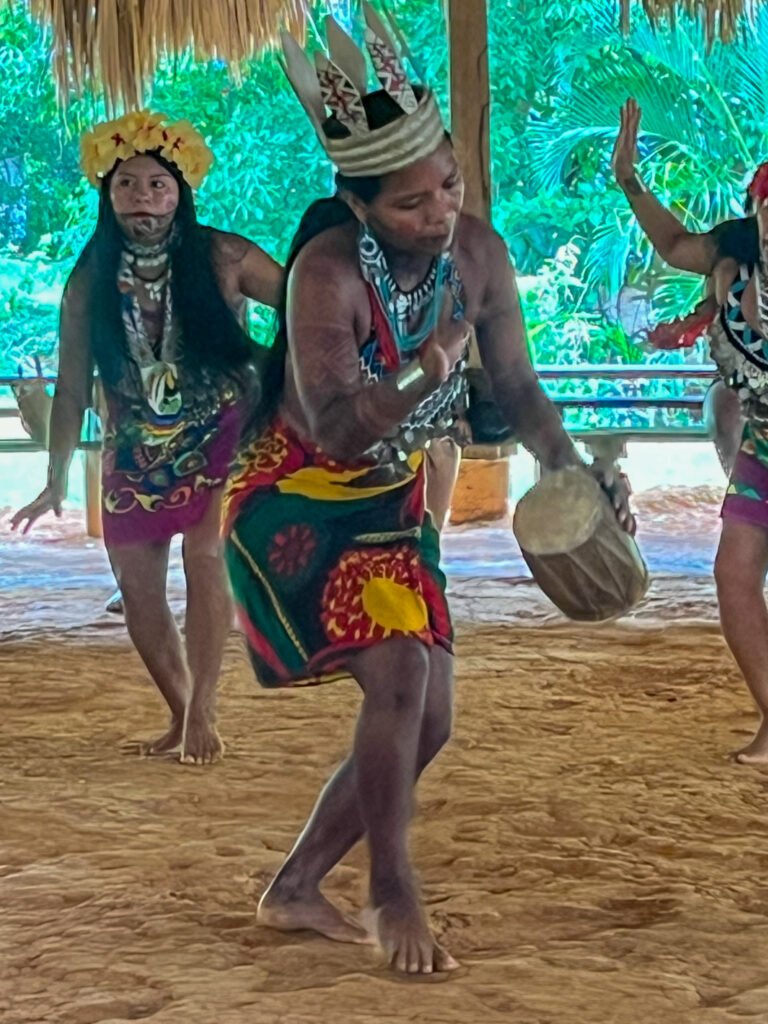
Music and dance are vital expressions of cultural continuity, often performed to the rhythmic beat of drums and flutes made from local reeds. The Emberá chose some of their most important dances to perform for us mimicking animals found in their environment. Then, they invited us to dance with them. During the visit, we were honored with a talk by the tribe’s chief who gave us the history of his village, shared stories of his people, their relationships with other Emberá settlements and answered any questions we may have had.
EXISTING WITHIN THE CONFINES OF MODERN LIFE
The communities didn’t always live inside a national park. In the 1950s, families moved from Darién to farm, hunt, and fish. Thirty years later, the Panamanian government created Chagres National Park — and the land became a protected area around them. Panamanian government forced the Emberá to stop agricultural practices in favor of developing tourism. The Emberá were taught Spanish in order to facilitate this new way of life communicating with outsiders.
FINAL THOUGHTS
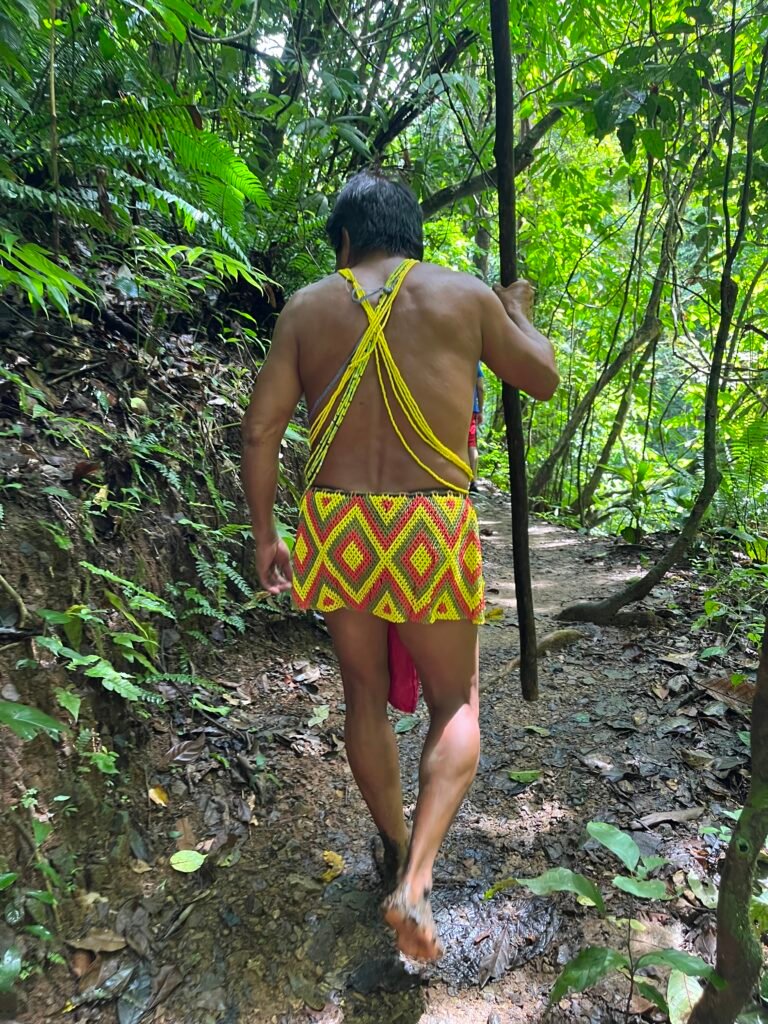
Immersing oneself in a mix of culture and adventure is the stuff of which the best memories are made. This is the first place I visited in Panama that made me feel like my life had become some sort of surreal existence. Cruising up a river in a hollowed out tree, walking arm in arm with a native guide and sharing stories with people so different from me is something I never dreamt I would do in a place like Panamá. For me, this is a definite must-do, not just for the things I experienced and learned, but for the perspective it gave me. Add this one to your list and thank me later.
KNOW BEFORE YOU GO
- Recommended: book through a community-run operator or directly with the village. I used a local guide named Bernal who arranged RT transportation from the city, our hike, lunch and activities at the village.
- Bring: appropriate footwear, a swimsuit, change of clothes, insect repellent, cash and plenty of water.
- The dry season, from December to April, offers easier river access, where visitors can come a little closer to the falls. However, visits are possible year-round.
- Be mindful and respectful of this beautiful culture: come with questions, interact and pay fair prices.
MORE POPULAR TOURS IN PANAMA CITY
Disclaimer: Some of the links in my content may be affiliate links. That means that if you purchase a product or service that I recommend, I get a percentage of the sale. These affiliates don’t cost you anything extra and help me keep the site going. I will never endorse anything fake or not worth considering. Thank you for your continued support.
For more information on another one of Panama’s indigenous comarcas, check out my article, The Dreamy World of Islas San Blas.
Special thanks to photographer, Mary Rogers, for allowing me to use her amazing photos of the Emberá in this post.